


Search Results for Tag: wind
Mafia launders dirty money in clean energy

Wind farms are attracting much attention from the Italian mafia (Photo credit: CC BY 2.0: Peter Rood)
We recently reported on corruption in the climate change industry. Now, a new report by the European Union’s police authority, Europol, says the Italian mafia is increasingly zooming in on clean energy projects such as wind farms in Italy as a way of laundering their illegal money.
The report say that green schemes in Italy “offer attractive opportunities to benefit from generous EU grant and tax subsidies.”
Though Italy is struggling with recession and unemployment, the renewables industry in the country is booming. Reports suggest the Italian government, helped by EU funds to promote clean energy, has provided more than $75 billion to producers of wind and solar energy over the past six years, leading to surging revenues.
That boom, the Europol report says, as well as the legal business structures that the renewable projects offer make the industry attractive to the mafia.
“The Italian mafia is investing more and more in renewable energy, especially in wind farms, to profit from generous European grants paid for by member states which allow them to mix dirty money with legitimate economic activities,” the report said.
In April this year, Italy made its biggest confiscation of mafia assets in history, including dozens of alternative energy companies worth a total of over $1.6 billion, according to news agency Reuters.
The owner Vito Nicastri, a 57-year-old businessman , once dubbed the “Lord of the Wind” because of his vast wind farm holdings, invested money made from extortion, drug sales, and other illicit activities for a heavyweight in Sicily’s Cosa Nostra crime group.


Exploring the North – Further North
Arriving in Tromso, Norway, we are now located just at the Arctic’s doorstep. It is a quiet strange feeling, when you suddenly stand at the edge of something, that is normally so incredibly far away. If it’s far away from you as well and you derive from that that you don’t have to care – hang on. You actually should, as the Arctic often is referred to as earth’s air conditioner. And on hot summer days without (working) air conditioning, you feel perfectly well what it is good for.
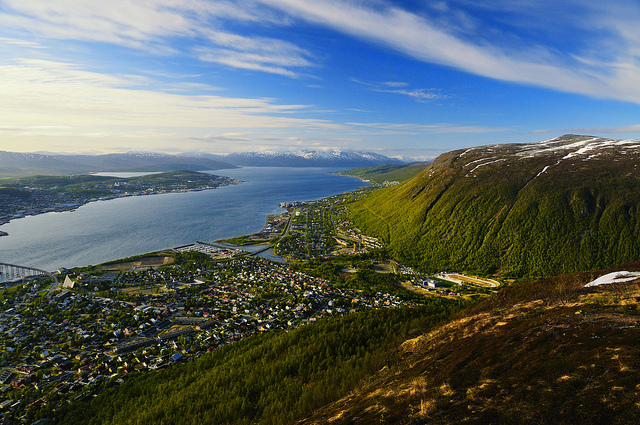
Thought you might have seen enough snow, so I found this Tromso view of June 2010 for you (Photo: CC-BY-NC-SA-2.0: Nietnagel)
If you look at such pictures of the Arctic region it does not at all like an air conditioning. I was actually suprised that it can be that green in the Arctic region, as I always associate of snow and ice with Artic. What about you?
But this ice is only there in winter time – that’s when it fulfils it’s cooling job, by reflecting 80 percent of sunlight back to space which then cannot heat up the ocean or earth anymore. But from March on, ice starts melting due to increasing temperatures. The decreasing sea ice cover uncovers the dark oceans that absorbs the sunlight instead of reflecting it – the cooling air conditioning turns into a heating facility.

Animation of Arctic summer ice cover (Credit: By NASA/Goddard Scientific Visualization Studio)
So far, the Arctic yet hasn’t been completely ice-free during the warm summer period. But you might remember scientists worrying last summerabout the small area that is left ice covered: The larger the ice free part, the more heat is absorbed by the ocean underneath – in turn, even more ice melts and a vicious circle starts.
Not on the edge of the Arctic, but on the edge of Arctic research, you find scientists working on how this influences the Arctic environment. Sometimes this influence can even be positive: Researchers recently found that microbes in the soil can fix more carbon in a warmer climate.
But yet, researchers cannot tell how Arctic ice cover will evolve, but they work for example on better models to predict what is going to happen. That is especially important, as many earth systems are connected: A warming Arctic sea also affects ocean currents for example, that – connected to each other – span over the whole planet. In turn, oceans take up less CO2 for example, and in consequence more of this greenhouse gas in the air, warms up the whole planet.
 Comments deactivated
 Loch Ness meets green power
 Author: Kerstin Schnatz
Scotland is one of the few nations in the world to have a Minister of Climate Change. We met Paul Weelhouse today at the World Climate Summit 2012 where he discussed the global energy mix of the future. While Qatar, represented by it’s Minister of Energy and Industry, counts heavily on natural gas, Scotland takes a differnt turn. Even though Scotland still is the biggest producer of oil and gas in the European Union and wants to keep this role, the country aims to run on 100% renewables by 2020. To reach this ambitious goal, lots of money and manpower are invested already. Even the mystic sea-monster Nessie takes part in the Scottish developement – but hear and see for yourself.
Paul Wheelhouse, Scottish Minister for Environment an Climate Change @WCS from DW_Global Ideas on Vimeo.
Comments deactivated New record in world wind market
 The World Wind Energy Association (WWEA) has some good news for the world market for wind turbines. Not only that the market has recovered last year, it also set a new record: 42 gigawatt of new capacity had been installed in 2011, the worldwide total capacity rose up to 239 GW. According to the WWEA todays wind power would be enough to cover 3 % of the world’s electricity demand. China is the biggest player in the business, says the WWEA. The country installed around 18 GW of new wind turbines within 2011, coming to a total capacity of 63 GW – that’s more than one fourth of the global wind capacity. The second largest market for new wind turbines was again the USA, followed by India and Germany, which grew about 2 GW.
Comments deactivated Does Going Green Pay Off?
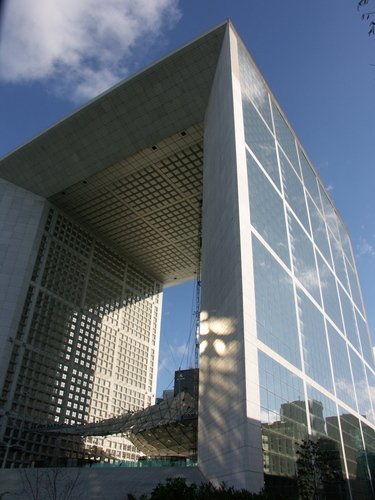
We wanted to share an interesting article we found on the Wall Street Journal today about the costs of going green. Across Europe, towns and cities are investing in sustainable architecture – buildings that run on clean energy, like solar or wind power.
The article says even though we might assume eco-friendly buildings will save on energy bills and increase property values, that hasn’t actually been proven yet. The costs of constructing green buildings is in itself quite expensive, and it’s too soon to back up the claim that the investment pays off in the end.
So is Europe moving too fast with its boom in green construction? Or will lower utility bills and higher property value will make up for the costs quickly? Let us know what you think…
Comments deactivated 


Feedback