


Search Results for Tag: recycling
Human bowels may hold key to greening the desert
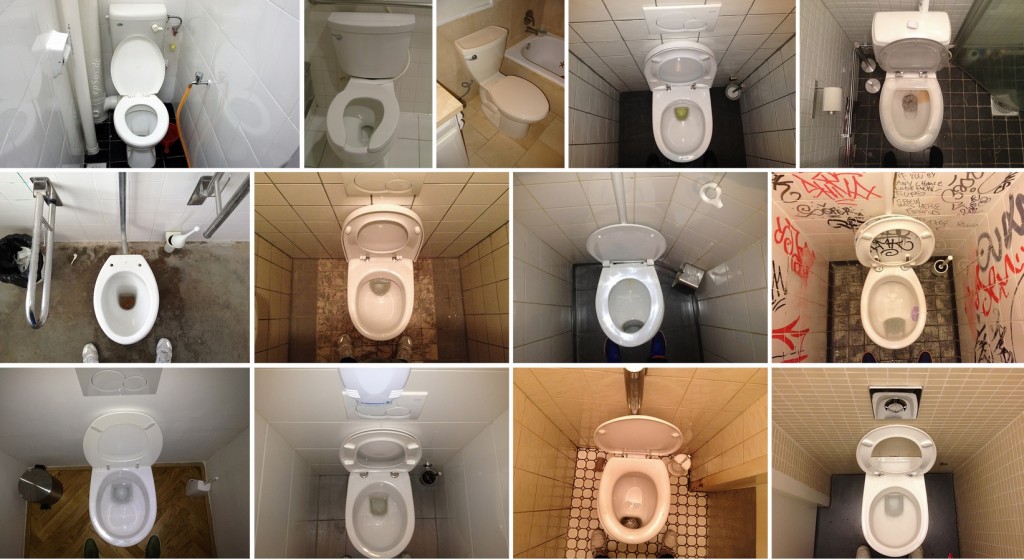 Reducing greenhouse gas emissions, ensuring food security and fighting the spread of deserts are among the biggest challenges facing humanity. But the solution for all of them may literally lie inside humans – as we hope to show in this bog post -pardon – blog post. Human waste has traditionally been used in some parts of the Amazon to create Terra Preta – black soil rich in nutrients – the result of mixing charcoal and human faeces into otherwise less fertile soil.
This super-rich black soil captures carbon dioxide, stores amazing amounts of water and sticks around for hundreds of years. And, yes, it also works with other types of waste (watch our report about how this works in India). In short: Terra Preta may be a potential one-stop shop for creating sustainable habitats – even in outer space. A bunch of filmmakers thinks that the human colon may help colonize Mars or operate space stations in the future. Here’s the trailer for their complete Terra Preta sales pitch:
Not convinced? Well, to learn more you may have to wait: the makers of the documentary are running a bit low on cash to complete post-production. To help fill their coffers go here.


Plastic bottles to greenhouses
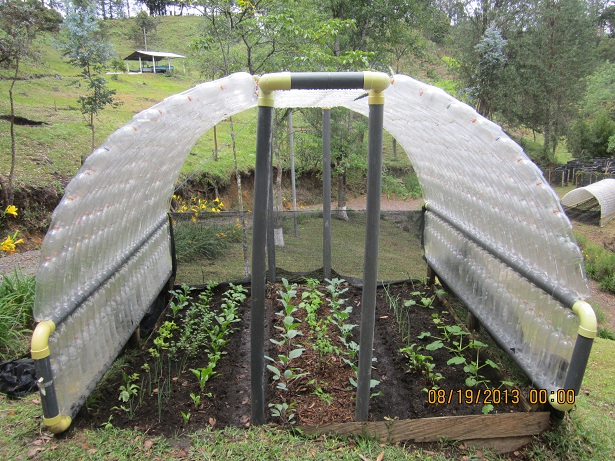 A few days ago we received a very inspiring idea from Colombia. The e-mail came from the Centre for Science and Environmental Awareness and it helps to deal with growing mountains of empty plastic bottles.
We learned from the institute’s website that in Colombia an incredibly large amount of 15,000,000 plastic bottles is dumped every day. These bottles are not only thrown into trash bins, they are mainly just thrown away somewhere and this way become a very serious environmental problem.
The Centre for Science and Environmental Awareness tries to tackle the problem. As you can see in the picture, greenhouses are built to grow daily goods. The plastic-bottle-roofs have a size of about 3×3 meters. With only 4 hours work a week the roofs help to feed a family for a whole year, writes Carlos Alberto Yepes Vera, director of the center.
He also calls out to donate bottles or similar garbage to build more of these houses. The project’s goal, he says is also to build an awareness among the population to avoid the use of plastic bottles.
We are extremely grateful to hear from ideas like this one, so send us more of it!
 Comments deactivated
 “No need to apologize for being on this planet”
Author: Kerstin Schnatz
Michael Braungart’s concept of zero waste is based on “cradle to cradle” rather than “from cradle to grave”
Photo credit: CC BY 2.0: Debbie(Woodlands Texas)/flickr.com: http://bit.ly/11JY1gl
He’s the man behind a number of quirky inventions – carpets that make the air cleaner, plastics free of toxic chemicals and underwear that can be tossed on the compost heap. What sounds like an eco-dream has already been turned into reality by Michael Braungart. The German chemist, who is professor of process engineering at Leuphana University of Lüneburg (Germany) and founder of the Environmental Protection Encouragement Agency (EPEA), aims to radically change the stuff around us. He offered an insight into his work at a conference hosted by the Heinrich-Böll-Foundation on inventions for a better tomorrow in Berlin on Thursday, June 6.
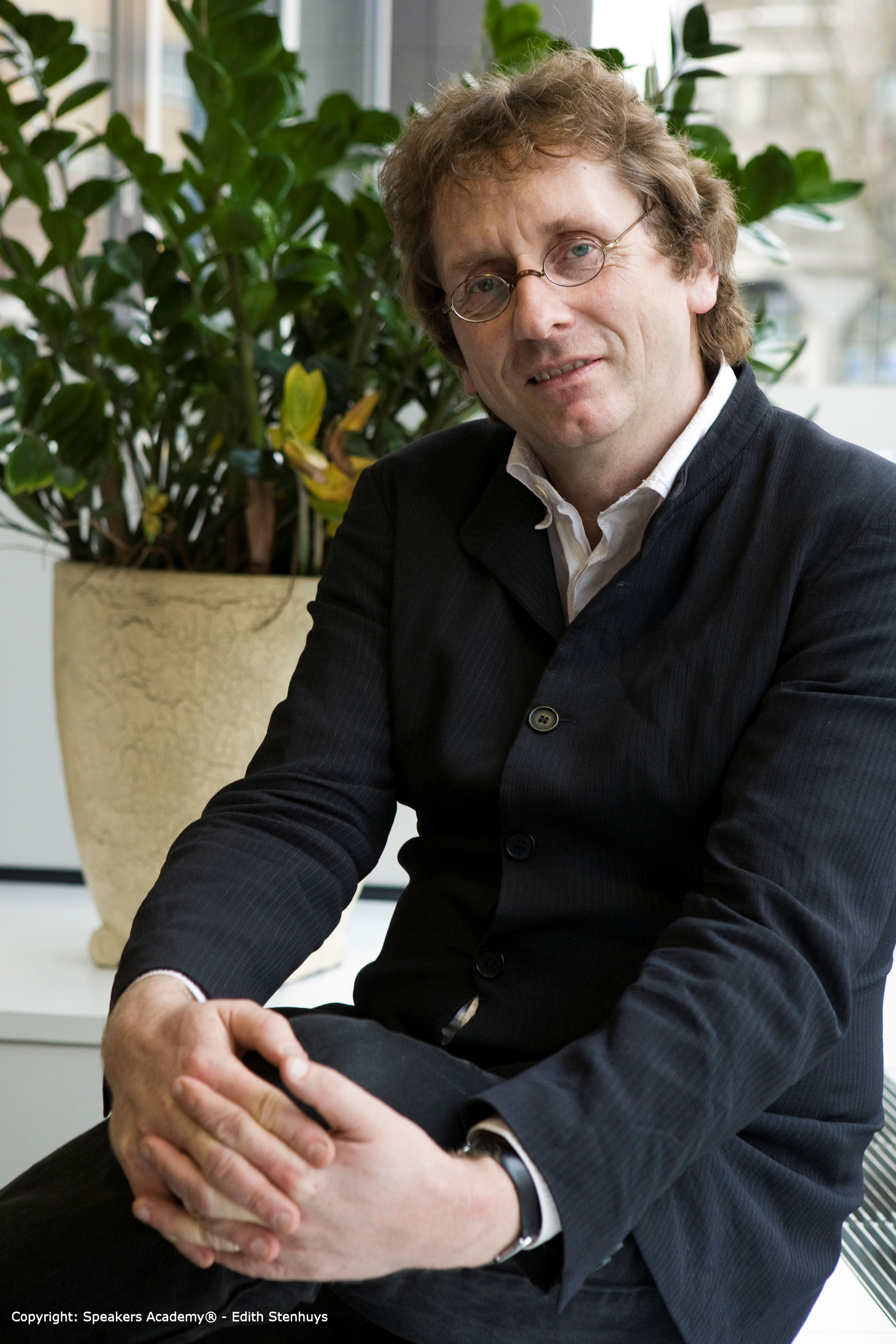
Michael Braungart, one of the founders of the chemistry division of Greenpeace, wants to “Re-Make the way we make things” with his philosophy of “Cradle to Cradle” (C2C).
Photocredit: Edith Stenhuys
Braungart’s concept “Cradle to Cradle” (C2C) is about reinventing the very composition of products, making pens, office chairs and even diapers really useful, re-usable and non-toxic. It’s a concept that knows no waste at all.
You think that buying organic food, producing less waste or driving a fuel efficient car are a good start for making our world greener? According to the 55 year-old, these choices are downright wrong. “If you hit your child only two rather than five times a day, you are still making a very bad choice.” Braungart says. Just like parents looking for less painful methods of educating their offspring, Braungart wants us to become good consumers. Rather than buying fewer clothes, for example to save on water, chemicals or CO2-emissions, we need to buy smarter apparel, he says. So, clothes that helps our skin breathe better and which can be easily recycled or composted when we don’t need them anymore.
Here’s Michael Braungart’s 2012 talk at TEDx
Unnoticed by most of us, Braungart’s revolution of stuff has already started: From underwear to office chairs and carpets over 1,100 products already carry a C2C label. However, the concept is highly disputed around the world. Even the title of his latest book “The Upcycle: Beyond Sustainability–Designing for Abundance” has raised hackles among many traditional ecologists striving for a more sustainable lifestyle. And his reply to those who want to reduce their CO2 footprint – a trend that many companies have adopted – is devastating: “You can only be carbon neutral if you stop breathing and don’t exist.”
Rather than a zero-emission footprint, he says it’s better to opt for what he calls a “beneficial footprint.” To Braungart, life is not about limiting yourself but about enjoying life – with the right kind of products. After all, he says, there is “no need to apologize for being on this planet.”
Comments deactivated Scientists turn trash into crude energy
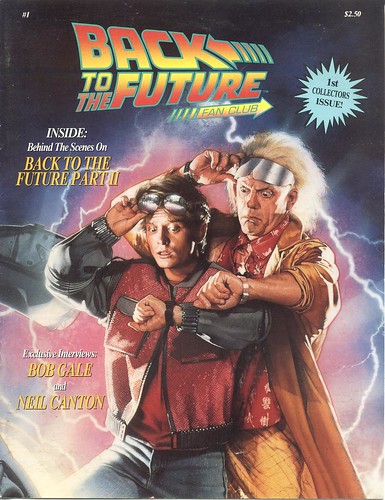
Remember Doc Brown? That crazy, white haired caricature of a scientist from the 1980s blockbuster scifi comedy Back to the Future? He’s the inventor of a spectacular (and – sadly – fictitious) device called the flux capacitor that is running first on plutonium, later on ordinary household garbage to power a time machine. Here’s what it looks like when Doc Brown is searching for fuel:
Scientists in Denmark have now hit upon a novel way to do just that: producing energy from household waste. While not quite matching Doc Browns achievement when it comes to the amount of energy harvested (let alone building a time machine) the scientists’ feat is impressive enough: Feeding biomass (comprising anything from sewage, compost, household garbage or waste from meat and dairy production) into what is essentially a 400 °C hot pressure cooker they managed to create something very close to fossil crude oil. What’s more, the production process used is more energy efficient than any other way of getting energy out of biomass.
We figure, if the Danish research team is still unhappy with the energy yield of their trash, they only have to wait another two years for expert help: In Back to the Future – Part II we learn that Doc Brown is going to visit us in 2015.
Comments deactivated Minister receives green bracelet
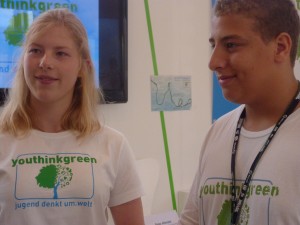
Ahmed together with one of his fellow climate ambassadors from Youthinkgreen.
Author: Kerstin Schnatz
Ahmed’s big eyes are beaming with pride. The young Egyptian is standing on the stage of the German Pavillon in Rio de Janeiro. The 16 year old pupil has started a recycling project at Kairo’s German school which he is presenting to an international audience today at the Rio+20 conference.
“Be the change you want to see in the world“
While politicians are negotiating the final document of the United Nations Conference on Sustainable Development just across the street, Ahmed wants to take action: „In Egypt no one separates their rubbish. Plastic, paper, food waste – everything goes into one bin.”
Triggered by the German initiative Youthinkgreen, the couragious teenager and his classmates set up a plastic recycling scheme at their school. The green initiative is supported by chancelor Angela Merkel and has reached over 200 young people in over ten countries so far. Some of them have come to the Rio+20 summit to present their local projects.
Change does not come easily
“A recycling company to pick up the plastic waste was found very easily.“ Ahmed reflects on his own initiative back home. “But after a few weeks, the garbage man told me that he would stop picking up our bin. It was flooding over with a variety of food scraps, paper and aluminium cans.” To get everyone at school to separate their rubbish correctly, a rota was set up. When asked how he made his classmates do the smelly job, Ahmed laughs: „At the beginning no one wanted to bring down the odd rubbish bin. Now you get a bag of sweets, so my friends sometimes even fight over it.”
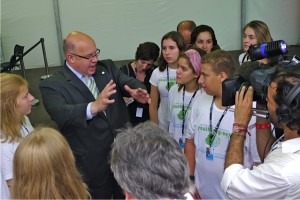
Peter Altmaier and the Youthinkgreen crowd at the Rio+20 summit.
Handshake with a Minister
After the presentation, Ahmed even gets a chance to meet the German Environment Minister Peter Altmaier. Together with his friends from the Youthinkgreen crew, the young man has managed to sneak into Hall 4 – a restricted area and normally reserved for state and United Nations delegates only. But Ahmed keeps his cool and steps up right next to Altmaier: „We have come to bind a green bracelet to your wrist!“ Ahmed and his friends hope that through this little gesture the politician will be reminded of young people’s longing for a greener future.
Altmaier who just turned 54 two days before, laughs heartily and stresses how important it is that young people take action. The Minister takes his time, listens patiently to everything the youngsters tell him. “Please visit Egypt and help us to put up more solar panels.“ Before the journalists can push in to fire their questions at the Minister, Ahmed has grabbed the opportunity to speak up again. Altmaier says that he wishes all the best for Egypt but that he unfortunately can not be in every country at the same time but will remember this meeting. Then he turns around to talk into the television cameras.

At the Rio+20 congress, teenagers from Youthinkgreen handed over green bracelets and a position paper to politicians and scientists from around the world.
Comments deactivated 


Feedback