


Search Results for Tag: food
#speciesoftheweek: The luscious lobster
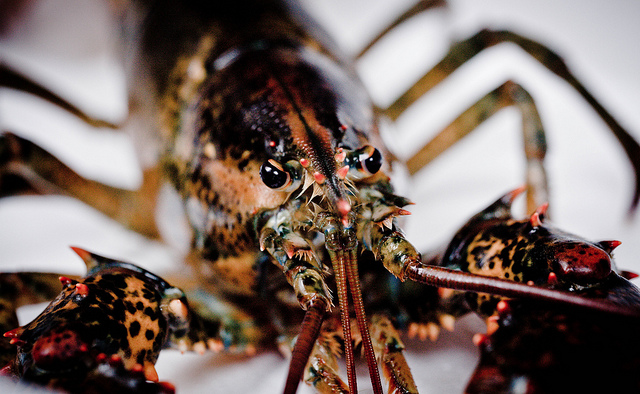
Animal with slightly strange habits, the lobster, CC BY 2.0 by Tatiana Vdb via flickr.com
You may know our #speciesoftheweek as a highly priced delicacy for the rich and famous. But that’s not the reason for us to chose the lobster for our hit-list of animals. There’s a lot more to the crustacean than meets the eye. In fact, lobsters are marvelous and in some of their habits quite strange creatures. They tend to do things we probably won’t like to see.
1. Lobsters are closely related to shrimp and crabs.
2. Lobsters are found in all of the world’s oceans, as well as brackish environments and freshwater.
3. Lobsters have poor eyesight but very well developed senses of taste and smell.
4. Lobsters are cannibals (at least sometimes, usually they feed on fish and mollusks).
5. Lobsters (female) carry their eggs under their abdomens for up to a year before releasing them as larvae into the water.
6. Lobsters used to be paupers’ meals in the USA during the 17th- and 18th-century. In fact, there were laws forbidding people to feed servants lobster more than twice a week.
7. Lobsters (male) literally hate each other and keep on fighting all the time over everything, a fact that females find arousing.
8. Lobsters pee in each others faces, it doesn’t matter if in a fighting or flirting situation (To do so, they have urine releasing nozzles right under their eyes).
9. Lobsters today are threatened by overfishing and pollution-related diseases.


Why we need the wild relatives (CWR) of our main crops
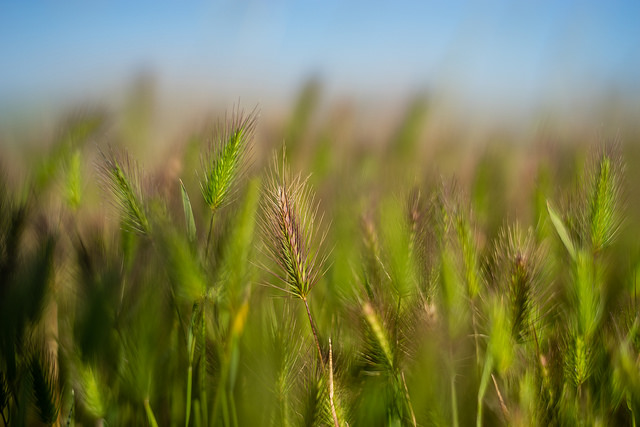
Wild Grass, CC BY 2.0 – flickr by Stanislav Sedov
CWR is one of the abbreviations that are as unknown as they are important for the entire human race. It stands for Crop Wild Relatives and summarizes the wild, non-cultivated versions of our common food crops – wheat, sugar cane or peaches – to name just a few. Why are those wild versions important? Today’s cultivated varieties usually only produce fruit in certain environments, or under certain conditions – they would not be successful in the same way somewhere else.
However, wild crop varieties grow naturally under a much wider range of environmental conditions, and are still closely related to today’s crops. With the help of these varieties, farmers, scientists and others interested in crops are able to develop even more resistant and adaptable food sources (which is especially important in times of climate change and an explosively growing world population).
Having the examples mentioned above in mind, we find Aegilops tauschii, a relative of wheat that is resistant to the Hessian fly, a pest of cereal crops. We also see Saccharum arundinaceum, a relative of sugar cane that has the ability to survive very low temperatures. Or we see Prunus ferganensis, a wild version of peach, that is more tolerant to drought. Losing these wild varieties would mean losing the opportunity to breed resistant, stronger or more tolerant crops, if needed in the future (Source: BBC).
To raise awareness of this fact, scientists have just released the most complete database of wild crops to date. This database includes 173 crops and their 1,667 main wild relatives, along with their traits and location. The aim of this Atlas is to provide information on distribution and to collect priorities for the wild relatives of important crops. Exploring the map shows that many of the CWRs are growing in actual conflict zones in the Middle East, the cradle of all modern agriculture. And that adds a different, but not be underestimated, factor to today’s conflict situation.
 Comments deactivated
 Educational television, monkey style
Never let it be said that television is not good for your education! When it comes to group of wild monkeys in Brazil, TV is indeed very entertaining AND educational. The group learned new tricks after watching a video of other monkeys doing the same action.
marmoset monkey CC NC ND 2.0: reMuse/flickr
A team led by the University of St. Andrews and the University of Vienna filmed a group of trained monkey performing different techniques to open fruits. That included pulling open a drawer or lifting a lid, as the St. Andrews reports on the university’s website.
These recorded actions were replayed to the group of wild living monkeys in the Brazilian jungle. The video set, placed in a protective case arouse a lot of interest among the primates. They watched the trained monkeys’ performance and afterwards used their new learned abilities to work with a transparent box that included the treat, sitting below the screen.
Comments deactivated Mankind’s best friends
Many people share their homes with them and all of us benefit from them – for example for food. Without the help of animals, mankind would probably not be as advanced as it is today. Some species have been on our side for a very long time. But which was the first species that joined human lives? Which animal was first domesticated and why did our ancestors choose this particular species?
Pigs are among the youngest members. Humans began to domesticate pigs around 4600 B.C. Evidence in form of fossils and DNA pieces for the time has been found in northern Germany. The finding is especially significant because the people in that era were Mesolithic hunter-gatherers (the so called Ertebølle culture) who may have already started to domesticate dogs but were not known to raise animals and crops for food.

Photo Credit: CC BY 2.0, Alois Staudacher
Our list continues with one of the most beloved pets of our time, the cat. The oldest record of a cat living together with humans has been found on Cyprus about 9,500 years ago. Scientists found a young man buried along with a wildcat. Looking at Egypt about 4000 years ago, we find wall art displaying mummified cats. So we can be certain that feral cats by that time had already become loved pets. So it is clear that domestication happened in between these two dates. When exactly and why we don’t know yet.

Photo Credit: CC BY 2.0, gweni63
Looking at sheep, the history of their domestication by mankind started even earlier. In ancient Mesopotamia the wild mouflon was domesticated between 11000 and 9000 B.C. These sheep were primarily raised for meat, milk, and skins. Wool only became important a few thousend years later, around 6000 B.C. In Iran a trading system was established that exported the wool to Africa and Europe.

Photo Credit: CC BY 2.0, Marco Verch
The last animal in our list has been alongside of humans since between 18,800 and 32,100 years ago in Europe. A study explains that our ancestors started to turn their lupine foes into their best friends. We are talking about the dog. Or at least an animal that is a direct relative of the dogs we know today. Fossils of dog-like animals have been found, the study explains. But these creatures did not appear to leave any descendents, so there is no perfect proof as long as nobody can travel back in time to see our grand-grand-grand-grand-folks with their poochies.
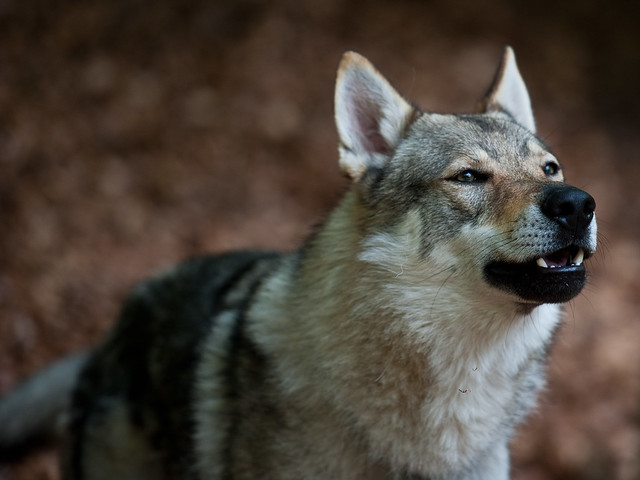
Photo Credit: CC BY 2.0, Sonja Pauen
Comments deactivated The 5 hungriest animals
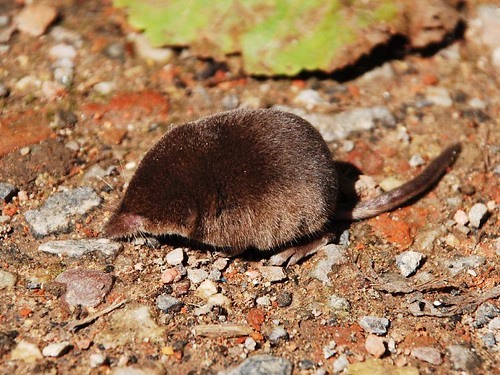
1. The American Pygmy Shrew (Sorex hoyi)
With a pulse clocking in at more than a 1000 per minute, the smallest mammal in North America really needs lots of food to keep its phenomenal metabolism going. Every day it eats three times its own weight. To do so it needs to constantly eat and never sleeps for more than a few minutes. An hour without food would mean certain death. But this high-octane life style takes its toll – the 5 cm long animals typically live barely a year.
(Photo Credit: CC BY 2.0 Flickr/polandeze)
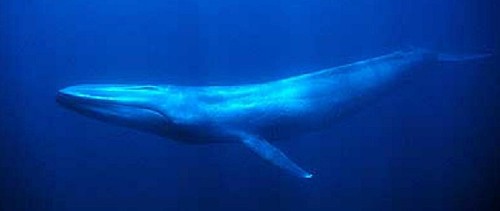
2. The Blue Whale (Balaenoptera musculus)
As the largest animal ever to have lived you’d expect the blue whale to be a good eater. 30 meters long and weighing some 170 tons, it eats up to 3,6 tons of krill (a type of plankton) a day. That’s equivalent to a daily intake of 1.5 million Calories – or about 6000 Snickers bars.
(Photo Credit: CC BY-NC-ND 2.0 Flickr/flickkerphotos)
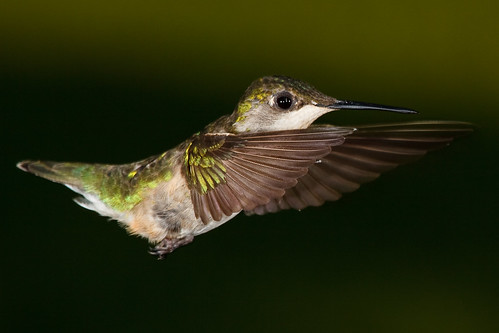
3. The Humming Bird (Trochilidae)
With its heart beating up to 20 times a second during hovering flight, humming birds need lots of food to maintain their phenomenal flight engines powering their wings which can flap up to 80 times a second. They eat up to twice their weight in nectar every day making them not only the hungriest birds but the hungriest animals outside the insect realm.
(Photo Credit: CC BY-NC-SA Flickr/Jason Paluck)
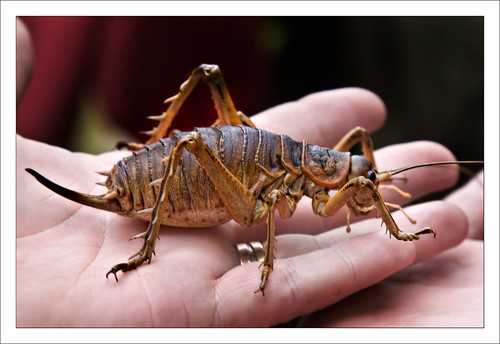
4. The Giant Weta (Anostostomatidae)
With a span of up to 18cm and a weight of 70 grams, this creepy crawly is considered the largest insect in the world. Here’s a specimen that is officially the largest on record – discovered by a former park ranger on new Zealand’s Little Barrier island. And it is very hungry indeed. The news item shows it attempting to gobble up a carrot. The park ranger added: “She would have finished the carrot very quickly, but this is an extremely endangered species and we didn’t want to risk indigestion.”
(Photo Credit: CC BY-ND 2.0 Flickr/mikex)
5. The Star-Nosed Mole (Condylura cristata)
If you are hungry, you want to eat. Quickly. By that measure the star-nosed mole must be one of the hungriest animals around – because it eats faster than any other mammal. It , both, finds and swallows its food typically in less than a quarter of a second. Which is about as fast as you blink.
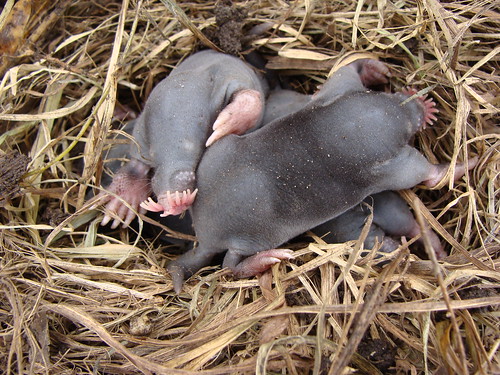
(Photo Credit: CC BY-NC 2.0 Flickr/hillbraith)
Comments deactivated 


Feedback