


Search Results for Tag: emissions
Study says livestock emissions can be cut by 30 percent
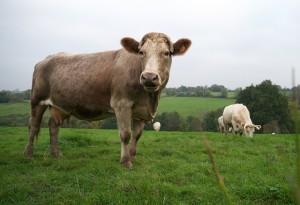
Greenhouse gases emitted by cows during digestion are a major pollutant
We’ve all heard about how cows and other grass-eating cattle release methane, a powerful greenhouse gas (GHG), when they belch and fart. The United Nations has suggested in the past that the environmental impact of cattle might be even more damaging than the emissions of cars and trucks combined. Now, a new study by the Food and Health Organization (FAO) says that greenhouse gas emissions by the livestock sector could be cut by as much as 30 percent if farmers adopt better techniques within existing production systems.
Titled, Tackling climate change through livestock: A global assessment of emissions and mitigation opportunities, the new study says emissions linked to livestock supply chains add up to 7.1 gigatonnes of carbon dioxide equivalent (CO2-eq) per year – or 14.5 percent of all human-caused GHG releases.
That’s less than the 18 percent that was cited by the FAO in a widely-quoted study in 2006 (Livestock’s Long Shadow) on emissions linked to global meat production. The FAO says the new figure is based on a new revised modelling framework and updated data.
The latest report pinpoints the main sources of emissions at different stages of various livestock supply chains – food production and processing (45 percent of the total), outputs of greenhouse gases during digestion by cows (39 percent) and manure decomposition (10 percent).
So, how can livestock production – a wide-ranging, globe-spanning activity which varies greatly from country to country – lower its emissions? The FAO says it will require a mix of policies, incentives, and on-the-ground work.
The FAO study however says there is no need to shift from small-scale and backyard to industrial livestock farming. It says farmers need to more widely adopt best practices and technologies in feeding, health, husbandry and manure monitoring as well as make greater use of underused technologies such as biogas generators and energy saving devices.
“These efficiency gains can be achieved by improving practices, and don’t necessitate changing production systems,” Ren Wang, FAO assistant director general for agriculture and consumer protection, says. “But we need political will, better policies and most importantly, joint action.”


“No need to apologize for being on this planet”
Author: Kerstin Schnatz
Michael Braungart’s concept of zero waste is based on “cradle to cradle” rather than “from cradle to grave”
Photo credit: CC BY 2.0: Debbie(Woodlands Texas)/flickr.com: http://bit.ly/11JY1gl
He’s the man behind a number of quirky inventions – carpets that make the air cleaner, plastics free of toxic chemicals and underwear that can be tossed on the compost heap. What sounds like an eco-dream has already been turned into reality by Michael Braungart. The German chemist, who is professor of process engineering at Leuphana University of Lüneburg (Germany) and founder of the Environmental Protection Encouragement Agency (EPEA), aims to radically change the stuff around us. He offered an insight into his work at a conference hosted by the Heinrich-Böll-Foundation on inventions for a better tomorrow in Berlin on Thursday, June 6.
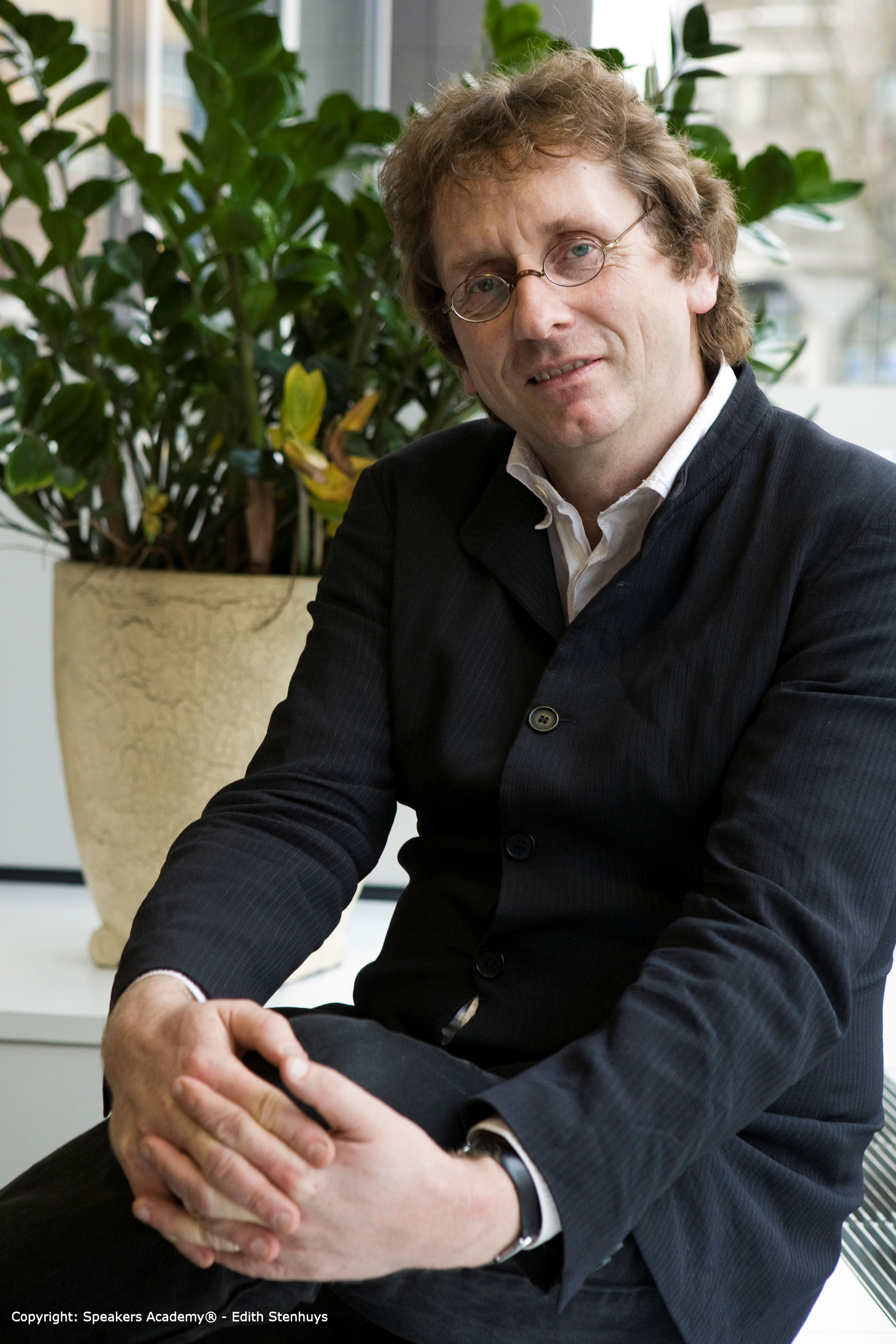
Michael Braungart, one of the founders of the chemistry division of Greenpeace, wants to “Re-Make the way we make things” with his philosophy of “Cradle to Cradle” (C2C).
Photocredit: Edith Stenhuys
Braungart’s concept “Cradle to Cradle” (C2C) is about reinventing the very composition of products, making pens, office chairs and even diapers really useful, re-usable and non-toxic. It’s a concept that knows no waste at all.
You think that buying organic food, producing less waste or driving a fuel efficient car are a good start for making our world greener? According to the 55 year-old, these choices are downright wrong. “If you hit your child only two rather than five times a day, you are still making a very bad choice.” Braungart says. Just like parents looking for less painful methods of educating their offspring, Braungart wants us to become good consumers. Rather than buying fewer clothes, for example to save on water, chemicals or CO2-emissions, we need to buy smarter apparel, he says. So, clothes that helps our skin breathe better and which can be easily recycled or composted when we don’t need them anymore.
Here’s Michael Braungart’s 2012 talk at TEDx
Unnoticed by most of us, Braungart’s revolution of stuff has already started: From underwear to office chairs and carpets over 1,100 products already carry a C2C label. However, the concept is highly disputed around the world. Even the title of his latest book “The Upcycle: Beyond Sustainability–Designing for Abundance” has raised hackles among many traditional ecologists striving for a more sustainable lifestyle. And his reply to those who want to reduce their CO2 footprint – a trend that many companies have adopted – is devastating: “You can only be carbon neutral if you stop breathing and don’t exist.”
Rather than a zero-emission footprint, he says it’s better to opt for what he calls a “beneficial footprint.” To Braungart, life is not about limiting yourself but about enjoying life – with the right kind of products. After all, he says, there is “no need to apologize for being on this planet.”
 Comments deactivated
 Barack Obama on Climate Change

Barack Obama (Photo: CC BY 2.0: Pete Souza/Ethan Bloch/flickr.com: http://bit.ly/WFXYGs)
You might know the situation when politicians are talking and you are just wondering, whether the “facts” they name are actually true and how they fit into a larger context? That’s how we felt, when we read the statements of US presidential candidates during the pre-election period concerning climate change. It’s custom that candiates are asked 14 questions from American scientific community and one of those questions always addresses climate change (which wasn’t really subject to election campaigns). This year the question for re-elected President Barack Obama and his rival Mitt Romney was the following:
The Earth’s climate is changing and there is concern about the potentially adverse effects of these changes on life on the planet. What is your position on cap-and-trade, carbon taxes, and other policies proposed to address global climate change—and what steps can we take to improve our ability to tackle challenges like climate change that cross national boundaries?
As the US are economically and environmentally quite powerful country, it really matters what the future president’s standing is. So we grabbed three statements of each candidate and had a look what’s behind it.
 read more
Comments deactivated A comprehensive inventory of Tanzania’s forests
Nearly 20% of green house gas emissions worldwide are caused by deforestation and forest degradation in developing countries. Estimating and reducing these emissions is therefore one of the key goals for the international community as the Rio+20 conference on sustainable development in June draws closer. One country attempting to do just that is Tanzania. The country is currently in the process of drawing up a comprehensive inventory of its forests as you can see in the video above by the Food and Agriculture Organization of the United Nations (FAO). The inventory is meant to help the East African country to better manage its natural resources. Today more than a third of Tanzania is forested, but almost 1% of that forest is being lost annually. The inventory will measure how much carbon is stored within Tanzania’s forests and will help the country to understand the role it can play in mitigating climate change.
French
Spanish
Comments deactivated Take a deep breath in Laos

As a Journalist from Berlin, traffic in Asian cities is usually quite chaotic and for foreigners mostly an adventure. In Mumbai, India crossing a street could be a struggle of survival as one has to pass a mixture of motorbikes, cars, cows and rikshas. It’s the same in Bangkok,Thailand – just without cows. The worst about the traffic is not the chaos, it’s the pollution. The air people inhale is filled with dust, it sticks on the skin and it is also full of emissions polluting the air.
In Laos, the chaos has not arrived yet. The streets of its capital Vientiane are quiet and mostly empty. There are just a few bikes, scooters or motorbikes – sometimes a car. That keeps the CO2-emission low: 2010 Laos emitted a little more than 1,5 million tons, the United States for example 5,7 billion tons. Another reason is, that Laos has no heavy industry. But it would be a mistake to think of Laos as climate-friendly country where everyone could take a deep breath of clean air. Because it is not people’s climate-awareness that makes Laos climate friendly. The reason is the poverty of the country. The Human Development Index lists Laos as a one of the poorest countries in the world. People just can´t effort a car.
Comments deactivated 


Feedback